
 English
Views: 0 Author: Site Editor Publish Time: 2026-01-23 Origin: Site


A 5-axis CNC machining center represents one of the most advanced forms of automated manufacturing technology. Unlike traditional 3-axis machines that move in X, Y, and Z directions, a 5-axis system adds two additional rotational axes, enabling precise machining from virtually any angle. This transforms the way manufacturers process complex components—especially in industries requiring composite CNC machining, aerospace-grade parts, precision molds, automotive components, and intricate industrial structures.
With global demand for lightweight materials, complex geometries, and higher efficiency, 5-axis machining has become a core technology for modern production. This article provides an in-depth explanation of what a 5-axis CNC machining center is, how it works, its key advantages, major industrial applications, and what factors buyers should consider when selecting such equipment.
A 5-axis CNC machining center is a computer-controlled machine capable of simultaneously moving a cutting tool or workpiece in five different axes: the three linear axes (X, Y, Z) and two rotational axes (A, B, or C). This synchronized movement allows the machine to cut parts with undercuts, curved surfaces, variable-angle features, and multi-sided shapes—all in a single setup.
While 3-axis machining is ideal for flat parts, slots, and simple contours, it cannot reach many angles required for modern product designs. This is where a 5-axis machining center excels, enabling full-surface access without manual repositioning. As a result, the technology significantly improves accuracy, speed, and overall productivity.
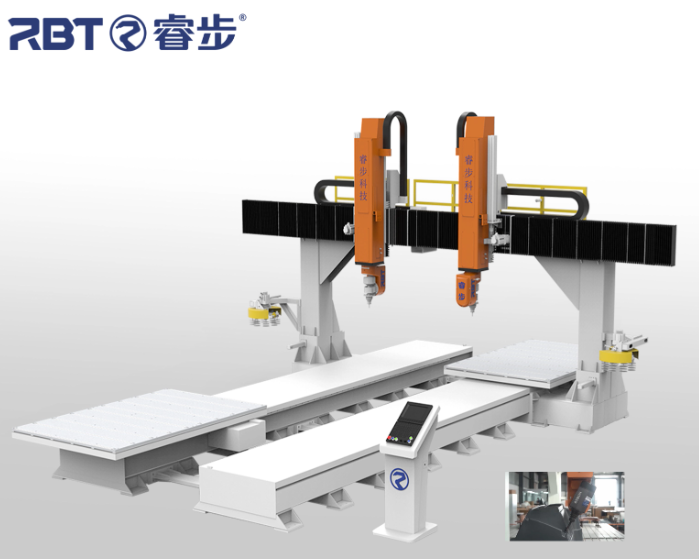
A 5-axis machining center achieves its capabilities by integrating mechanical structure, servo motors, and CNC control algorithms that allow coordinated multi-axis movement. There are two primary forms:
The spindle tilts or rotates along one or two axes. This configuration is common in gantry machines, high-speed machining centers, and large-format composite CNC machining setups.
The worktable rotates in one or two axes while the tool moves linearly. This setup is widely used for mold making, aerospace components, and precision metal machining.
Both mechanisms use advanced control software to coordinate simultaneous movements, enabling ultra-smooth toolpaths and eliminating the need for complex manual adjustments. Modern systems integrate real-time compensation, high-speed interpolation, and dynamic machining algorithms to maintain accuracy even at high feed rates.
The growth of 5-axis machining is driven by the increasing need for precision, speed, and flexibility. Below are the major advantages that set it apart from 3-axis or traditional manual setups.
The most significant benefit is the ability to machine complex surfaces from any angle. Aerospace components, automotive body structures, composite parts, and mold cavities often include deep pockets, curved surfaces, and inclined edges. A 5-axis CNC machining center can reach these areas effortlessly, enabling highly detailed machining without compromising structural integrity.
This is especially important in composite CNC machining, where parts are often formed with varied contours, ribs, and aerodynamic profiles. Traditional machines struggle to reach the correct cutting angles, whereas 5-axis equipment ensures consistent results in both trimming and drilling operations.
In a 3-axis machine, operators must manually reposition the workpiece multiple times to machine all faces, increasing labor effort and introducing alignment errors. By contrast, a 5-axis CNC machining center performs nearly all operations in one clamping. This greatly reduces cycle time and boosts throughput.
Fewer setups also mean:
Less risk of inaccuracies
Shorter machining cycles
Better repeatability
Reduced operator fatigue
Lower cumulative costs
For companies processing large batches or complex parts, this efficiency translates directly into higher profitability.
Simultaneous 5-axis machining enables the use of shorter cutting tools, which improves rigidity and reduces vibration. This results in:
Smoother surfaces
Increased precision
Better dimensional stability
Reduced finishing work
The improved surface finish is crucial for industries such as aerospace interiors, automotive interior trimming, mold surfaces, and medical components. For manufacturers engaged in composite CNC machining, minimizing fiber tearing and ensuring clean trimming edges is an especially valuable benefit.
A modern 5-axis CNC machining center can process an impressive range of materials:
Composite materials (carbon fiber, fiberglass)
Thermoformed plastics (ABS, PC, PP, PETG, PVC, HDPE)
Soft metals (aluminum, brass, copper, zinc)
Aluminum honeycomb and paper honeycomb panels
Wood and engineered board materials
Foam, patterns, prototypes, and tooling boards
This versatility makes the equipment ideal for industries needing both strength and lightweight construction, such as EV manufacturing, aircraft interiors, marine products, sports equipment, and architectural fabrication.
5-axis machining technology is now a core manufacturing asset in many industries:
Aerospace: engine components, composite structures, interior panels
Automotive: dashboards, bumpers, composites, aluminum dies
Railway: interior decorations, panel systems, structural components
Energy: turbine blades, insulation materials, structural housings
Medical: prosthetics, orthopedic components, implants
Marine: hull structures, composite parts, mold patterns
General Manufacturing: tooling, fixtures, molds, automation parts
With the increasing adoption of lightweight materials and complex geometries, more companies are transitioning to 5-axis CNC machining centers to stay competitive.
Selecting a 5-axis machine depends on specific production needs. Key factors include:
A strong, rigid frame ensures accurate cuts, especially for heavy-duty processing or large-format composite CNC machining.
Higher spindle power is ideal for aluminum and mold steel; high-speed spindles are preferred for plastics and composites.
Choose based on part dimensions, especially for large panels or molded components.
Advanced 5-axis toolpath generation software ensures better performance.
ATC systems, probing, vacuum tables, and dust extraction enhance productivity.
Reliable technical support ensures long-term operational stability.
A well-selected machine directly influences manufacturing consistency and cost efficiency.
Manufacturing is moving toward:
Lightweight materials
Higher accuracy requirements
Rapid prototyping
Reduced waste
Customized and short-run production
More complex geometries
A 5-axis CNC machining center aligns perfectly with these trends, making it indispensable for modern production environments. Its ability to create intricate shapes quickly and accurately meets the demands of aerospace, electric vehicles, medical devices, renewable energy, and advanced consumer products.
Fujian RBT Intelligent Equipment Co., Ltd. is a professional manufacturer specializing in 5-axis CNC machining centers and multi-axis CNC solutions for plastics, composites, molds, and aluminum parts. With over 24 years of experience and a strong R&D team, we deliver high-precision, customizable CNC equipment built for industrial reliability. Our modern manufacturing base, strict quality standards, and global service network ensure customers receive comprehensive support—from technical consultation and installation to training and long-term maintenance. RBT is committed to innovation, quality, and helping manufacturers achieve greater productivity and machining efficiency.
1. What is a 5-axis CNC machining center used for?
It is used for machining complex multi-angle components in aerospace, automotive, medical, composite CNC machining, mold making, and industrial manufacturing.
2. What materials can a 5-axis machining center process?
It can process composites, plastics, aluminum, soft metals, wood, molds, honeycomb panels, and various engineered materials.
3. Is a 5-axis machine difficult to operate?
With modern CNC software and training, operators can quickly learn to manage toolpaths and setups. Many machines include automation features that improve ease of use.
4. Why is 5-axis machining better than 3-axis?
It offers higher accuracy, fewer setups, better surface finish, faster production, and the capability to machine complex curves and angled surfaces.
5. How do I choose the right 5-axis CNC machine?
Consider machine structure, spindle specifications, size, control system, automation needs, and the manufacturer’s technical support and service network.


