
 English
Views: 0 Author: Site Editor Publish Time: 2026-01-20 Origin: Site


A horizontal CNC machining center is one of the most critical and efficient machine types in modern manufacturing, especially for high-accuracy, multi-surface, and high-volume production. While vertical machines remain common, horizontal machining centers (HMCs) have become essential for industries that require elevated productivity, stable cutting performance, and automated multi-directional machining capabilities. In advanced sectors—such as aerospace, automotive, mold making, precision metalworking, and composite component production—horizontal CNC machining centers work alongside 5-axis CNC machining center systems to deliver unmatched output quality.
This article provides a comprehensive explanation of what a horizontal CNC machining center is, how it functions, why industries choose it over vertical machines, its role in modern smart manufacturing, and how leading suppliers like Fujian RBT Intelligent Equipment Co., Ltd. deliver world-class solutions.
A horizontal CNC machining center is a computer-controlled machine tool in which the spindle is positioned horizontally—parallel to the machine’s worktable. Unlike vertical CNC machines, where the spindle approaches the workpiece from above, an HMC allows the tool to cut from the side. This orientation introduces a series of advantages, including better chip evacuation, improved tool longevity, and superior machining performance for deep cavities or large surfaces.
Horizontal machining centers are commonly equipped with:
High-rigidity machine frames
Powerful spindle systems
Automatic tool changers (ATC)
Pallet changers or rotary tables
Multi-axis configurations, including compatibility with 5-axis CNC machining center functions
Because of these features, many industries rely on HMCs for medium- to large-scale production with tight tolerances.
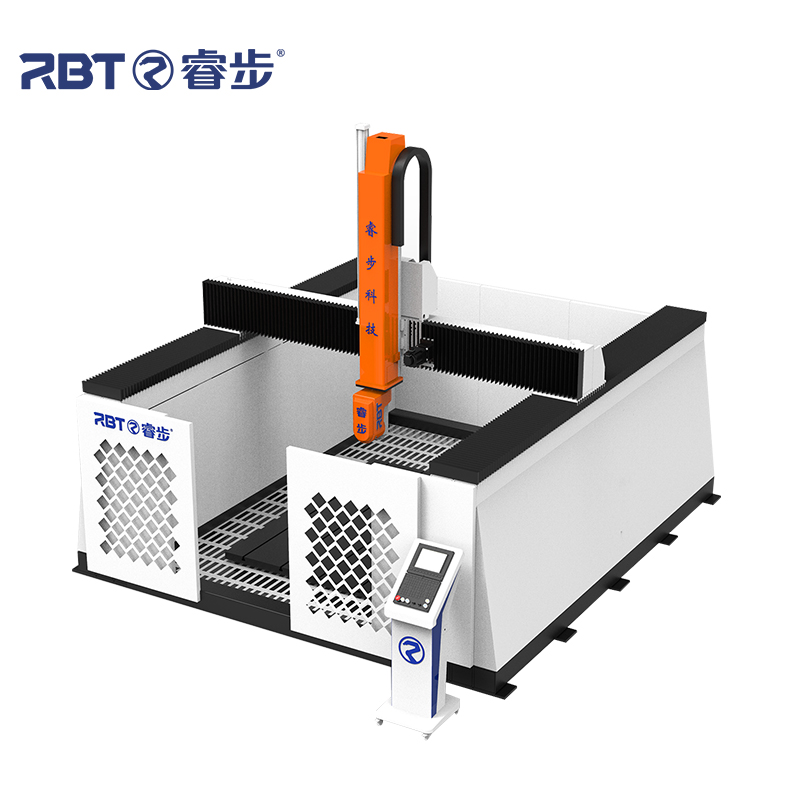
While individual machine specifications differ among suppliers, most horizontal CNC machining centers share the following core capabilities:
The defining feature.
A horizontal spindle enhances tool rigidity and approach angles, allowing efficient machining of:
Large flat surfaces
Deep pockets
Heavy steel components
High-strength alloys
The stability and lower vibration levels associated with horizontal machining provide a foundation for extremely accurate cuts and longer tool life.
Gravity helps chips fall away from the cutting area.
This improves:
Surface finish
Heat dissipation
Tool lifespan
In contrast, vertical machines often require additional air blast or coolant pressure to manage chip accumulation.
Most HMCs support multi-face machining via:
4-axis rotary tables
5-axis CNC machining center compatible units
Dual-pallet or multi-pallet systems
These allow for machining multiple sides of a part with minimal repositioning.
Horizontal CNC machining centers typically integrate seamlessly with automated workflows:
Robotic arms
Automatic pallet changers
Flexible manufacturing systems (FMS)
Multi-machine networking and data interfaces
This makes HMCs ideal for smart factories and Industry 4.0 production lines.
A horizontal CNC machining center operates through the following workflow:
The machining program is prepared using CAD/CAM software.
Complex shapes or multi-surface parts may require 5-axis CNC machining center programming methods.
Operators load the part onto:
A fixed table
A rotary table
A pallet system
For high-volume lines, pallet-changers enable continuous production.
The CNC control selects cutting tools from the ATC system based on programmed operations.
The machine executes precise toolpaths to remove material through milling, drilling, tapping, or contouring.
Coolants and gravity together ensure effective heat management.
Many modern HMCs include:
In-machine probing
Tool measurement devices
Automatic error compensation
This ensures accuracy even during long production cycles.
Understanding the difference helps users choose the right machine:
| Feature | Horizontal CNC | Vertical CNC |
|---|---|---|
| Spindle Position | Horizontal | Vertical |
| Chip Evacuation | Excellent | Moderate |
| Ideal For | Large parts, deep pockets, multi-face machining | Flat parts, simple geometries |
| Productivity | Higher (automation-ready) | Moderate |
| Cost | Higher initial investment | Lower |
| Precision | High | Good–High |
In most cases, horizontal CNC machining centers deliver:
Better stability
Higher efficiency
More consistent accuracy
Better automation compatibility
For industrial production, they often outperform vertical machines in the long term.
Because of their stability, automation capability, and multi-angle machining performance, HMCs are widely used in:
Machining structural aluminum components, frames, and high-strength alloy parts that require consistent precision.
Cylinder heads, gear housings, transmission casings, and high-volume engine components.
Complex industrial tooling, die structures, and large-format steel components.
With increasing use of advanced materials like carbon fiber, horizontal machines combined with 5-axis CNC machining center functions improve accuracy and surface quality.
Pump housings, turbine components, and structural heavy-duty parts.
Batch processing for steel, aluminum, titanium, and brass structures.
Horizontal CNC machining centers excel in environments where:
High productivity is required
Parts require machining on multiple surfaces
Material removal rates need to be high
Long-term cost-efficiency matters
Advantages include:
Fewer setups
Increased throughput
Better precision over long machining cycles
Lower tool breakage rates
Compatibility with automated loading systems
For many manufacturers, the investment in HMCs directly results in lower per-unit production cost and higher overall profitability.
As industries evolve, many horizontal machines now integrate 5-axis CNC machining center capabilities, making them suitable for:
Complex mold surfaces
Blades and impellers
Aerospace structural parts
Curved composite forms
Precision prototype manufacturing
This combination of horizontal stability and 5-axis flexibility creates a superior machining platform capable of producing extremely intricate geometries in fewer setups.
When selecting a machine, consider:
Required spindle power
Worktable size
Accuracy and repeatability
Control system compatibility
Automation integration needs
Material types
Production volume
Supplier’s engineering capability
After-sales support and training
These factors significantly affect long-term performance and operational stability.
When evaluating horizontal CNC machining centers or advanced 5-axis CNC machining center solutions, choosing a reliable supplier is as important as choosing the right technology. Fujian RBT Intelligent Equipment Co., Ltd. stands out as one of the leading CNC machining center suppliers in China and the global market.
1. 24+ Years of Deep Industry Experience
RBT has specialized in CNC machining technology for more than two decades, providing machines for composites, aluminum, molds, thermoformed plastics, honeycomb materials, and metal processing.
2. Complete Multi-Axis CNC Solution Provider
From stand-alone horizontal machines to high-speed 5-axis CNC machining centers, RBT offers an integrated product line that meets the needs of diverse industries.
3. Strong R&D and Engineering Capability
A professional technical team supports custom solutions, advanced machine design, and continuous innovation.
4. Modern Manufacturing Facilities
RBT operates a highly standardized factory equipped for precision assembly, quality inspection, and large-scale CNC machine production.
5. Global Service Network
With more than 60 service terminals worldwide, RBT offers fast, reliable installation, training, maintenance, and lifetime support.
6. Excellent Price-Performance Ratio
RBT machines deliver industrial-grade performance without the excessive cost often associated with international brands, making them ideal for companies seeking both quality and affordability.
With its strong technical foundation and global reach, RBT provides durable, precise, and high-efficiency CNC systems that help manufacturers increase productivity and reduce costs.
1. What is the main difference between a horizontal and a vertical CNC machining center?
The spindle orientation is the primary difference. Horizontal spindles offer better chip removal and stability, making them ideal for heavy-duty machining.
2. Can a horizontal CNC machining center support 5-axis machining?
Yes. Many models are designed to integrate 4th and 5th axis rotary units, making them compatible with 5-axis CNC machining center capabilities.
3. Is a horizontal CNC machining center suitable for composite materials?
Absolutely. With the correct tooling and settings, it performs exceptionally well in composite CNC machining, particularly for high-precision parts.
4. What industries benefit most from horizontal CNC machining centers?
Aerospace, automotive, mold manufacturing, energy, heavy equipment, and precision metalworking sectors rely heavily on HMCs.
5. Why choose Fujian RBT Intelligent Equipment Co., Ltd. as a CNC supplier?
RBT offers advanced engineering, high-quality machines, global service, strong affordability, and more than 24 years of professional CNC manufacturing experience.


